Basement Leak Detection in Garfield, NJ
Determine whether your wet basement stems from a concealed plumbing pipe failure or groundwater hydrostatic pressure. We deliver non-invasive diagnostic pinpointing across Garfield, NJ basements.
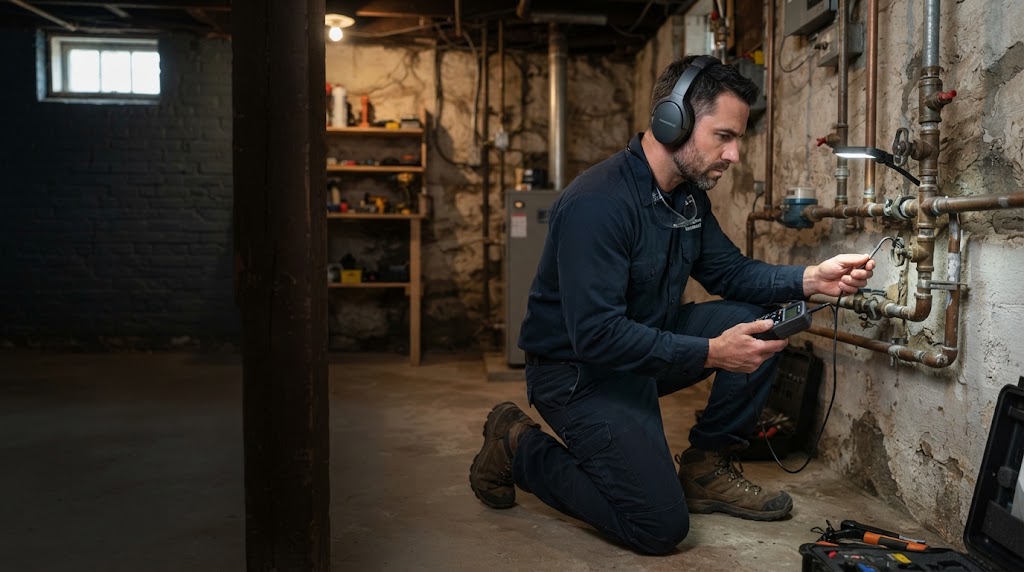
Pinpointing Hidden Basement Moisture Before Demolition
Finding standing water or damp drywall in your lower level is an urgent headache. In early-1900s multi-family dwellings, reliable basement leak detection Garfield NJ homeowners depend on provides the definitive answer to whether moisture is coming from natural exterior runoff or a pressurized domestic pipe breach. Within the first 100 words of inspecting your foundation, identifying the true source prevents you from spending thousands on unnecessary French drains when the real culprit is a pinhole pipe leak.
Many basements along Outwater Lane and the Passaic River corridor were built with rubble stone, brick, or poured concrete foundations that sit below the local seasonal water table. Over decades, domestic supply lines, water heater feeds, and boiler loops running along overhead joists or behind finished basement drywall corrode quietly.
By coordinating with our hidden water leak detection team and evaluating incoming utility feeds with our water line leak detection methods, we pinpoint the exact failure zone cleanly.
Plumbing Failure vs. Groundwater Infiltration
Knowing whether water is entering through foundation masonry or leaking from pressurized pipes changes everything:
- Plumbing Supply Leaks: Continuous pooling that occurs even during dry summer heat waves, accompanied by water meter movement or low water pressure.
- Groundwater Seepage: Moisture that corresponds strictly with heavy Bergen County rainstorms, snowmelt, or high Passaic River flood stages.
- Drain & Sewer Fractures: Foul sewer odors or wastewater backing up around floor drains and cleanouts during heavy household appliance usage.
Our Step-by-Step Basement Diagnostic Protocol
We use scientific instrumentation to identify the exact origin of basement water without unnecessary wall or floor demolition:
1. Chemical Water Testing
We test standing basement water for chlorine and municipal treatment additives. Presence of treated chemicals confirms a municipal supply line leak rather than natural groundwater.
2. Pressure Decay Isolation
Our technicians isolate individual hot, cold, and hydronic heating branch circuits to record pressure decay rates and identify which pipe zone is losing water.
3. Infrared Moisture Profiling
Thermal scanners identify moisture tracking paths behind finished drywall, wood paneling, and foundation walls, mapping water migration to its elevated entry point.
4. Acoustic Correlation
Sensitive ground and wall listening sensors pick up the continuous hiss of pressurized water escaping pipes buried under concrete slabs or inside partition framing.
Water Pooling in Your Garfield Basement?
Do not guess between groundwater and plumbing leaks. Call our local diagnostic specialist for precision non-invasive testing today.
What Happens After the Leak Is Found: Targeted Repair Options
Once we identify the exact root cause of your basement moisture, you can take targeted, economical action with an NJ licensed master plumber rather than paying for invasive guesswork:
Common post-detection repair paths include:
- Surgical Wall Repair: Opening a minimal 6x6-inch drywall port directly where acoustic and thermal scans pinpoint the ruptured supply line.
- Water Heater & Boiler Feed Replacement: Swapping out corroded relief valves, leaking boiler fill lines, or rusted shutoff valves feeding hydronic radiators.
- Drain & Sump Line Renewal: Repairing cracked sump pump discharge pipes or clearing clogged perimeter floor drain lines causing back-pressure leaks.
For detailed information on pipe repairs, explore our dedicated pipe leak repair guide.
Basement Detection Cost Factors
The total investment required to diagnose basement water issues depends on several physical factors:
- Finished vs. Unfinished Space: Unfinished basements allow direct visual and acoustic access, whereas finished basements require advanced thermal mapping.
- Pipe Configuration: Older two- and three-family homes often feature multiple complex plumbing loops from separate utility meters.
- Underground Slab Depth: Supply lines embedded deep beneath structural concrete floors require acoustic ground probes and tracer gas testing.
Garfield Neighborhoods Where Basement Leaks Occur Frequently
Different sections of Garfield present unique architectural and geological basement leak challenges:
Passaic River Area
Properties along River Drive and adjacent blocks experience high water tables, requiring chemical chlorine testing to separate river-influenced seepage from domestic pipe breaks.
Midland Avenue Corridor
Historic residential two-family properties along Midland Avenue often feature finished basement recreation rooms where hidden copper supply leaks seep behind drywall.
Downtown Garfield
Dense multi-family flats near the Garfield train station rely on aging basement manifolds and old water heater feeds where fitting corrosion is common.
When Is a Basement Leak an Immediate Emergency?
If water is rising rapidly near electrical service panels, threatening oil burners or gas water heaters, or gushing from a cracked foundation pipe, act immediately. Turn off your main water valve, shut down electricity to lower levels from an upper-floor breaker if safe, and review our emergency leak repair procedures or call us right away.
View full coverage areas across Bergen and Passaic counties on our Garfield leak detection service areas page.
Speak Directly With a Garfield Basement Leak Specialist
Call our office now to discuss the symptoms in your basement and schedule an accurate non-invasive evaluation.
Frequently Asked Questions About Basement Leaks in Garfield
We test water samples for treated municipal chlorine and perform hydrostatic pressure decay tests on domestic supply pipes. If chlorine is detected or line pressure drops with fixtures off, an active plumbing leak is responsible rather than natural groundwater.
Yes, our technicians utilize high-resolution infrared thermal imaging and acoustic sensors to map moisture trails and detect pipe vibration behind finished basement drywall and framing without exploratory demolition.
Garfield's severe winter freeze-thaw cycles cause exterior soil heaving against stone and masonry foundations, while uninsulated pipes along perimeter basement walls suffer contraction stresses and pinhole fractures.